Low Residency Program in Technology Management & Business Analytics: A Guide for Workforce Learners and Transfer Students
Blog Title Image
Why Low-Residency MS in Technology Management (Business Analytics) Programmes Matter
The MS in Technology Management with a Business Analytics concentration is a graduate degree designed for professionals seeking to lead in the digital economy. This program uniquely blends advanced technology management with the analytical skills needed to drive data-informed business decisions.
Low-residency formats—which combine online coursework with periodic, intensive on-site sessions—are increasingly popular for this field. They offer the flexibility required by working professionals and transfer students, while still providing essential face-to-face networking, hands-on learning, and access to campus resources.
For workforce learners and transfer students, this format supports career advancement, skill-building, and seamless academic progression without sacrificing employment or personal commitments.
Understanding the Programme: MS in Technology Management – Business Analytics Concentration
The MS in Technology Management prepares learners to bridge the gap between business strategy and technological innovation. The Business Analytics concentration sharpens this focus, equipping students to harness big data, predictive modelling, and digital tools to solve complex business challenges.
Key outcomes:
Mastery of data analytics, project management, and technology leadership
Ability to align IT initiatives with organisational goals
Preparation for roles such as analytics project manager, technology consultant, product manager, and digital transformation leader
Why this discipline matters:
In today’s data-driven world, organisations need leaders who can interpret analytics, manage digital transformation, and drive innovation. This program is designed to meet the growing demand for such hybrid professionals.
The Technology Management & Business Analytics Industry Landscape
Infographic of Technology & Analytics Landscape
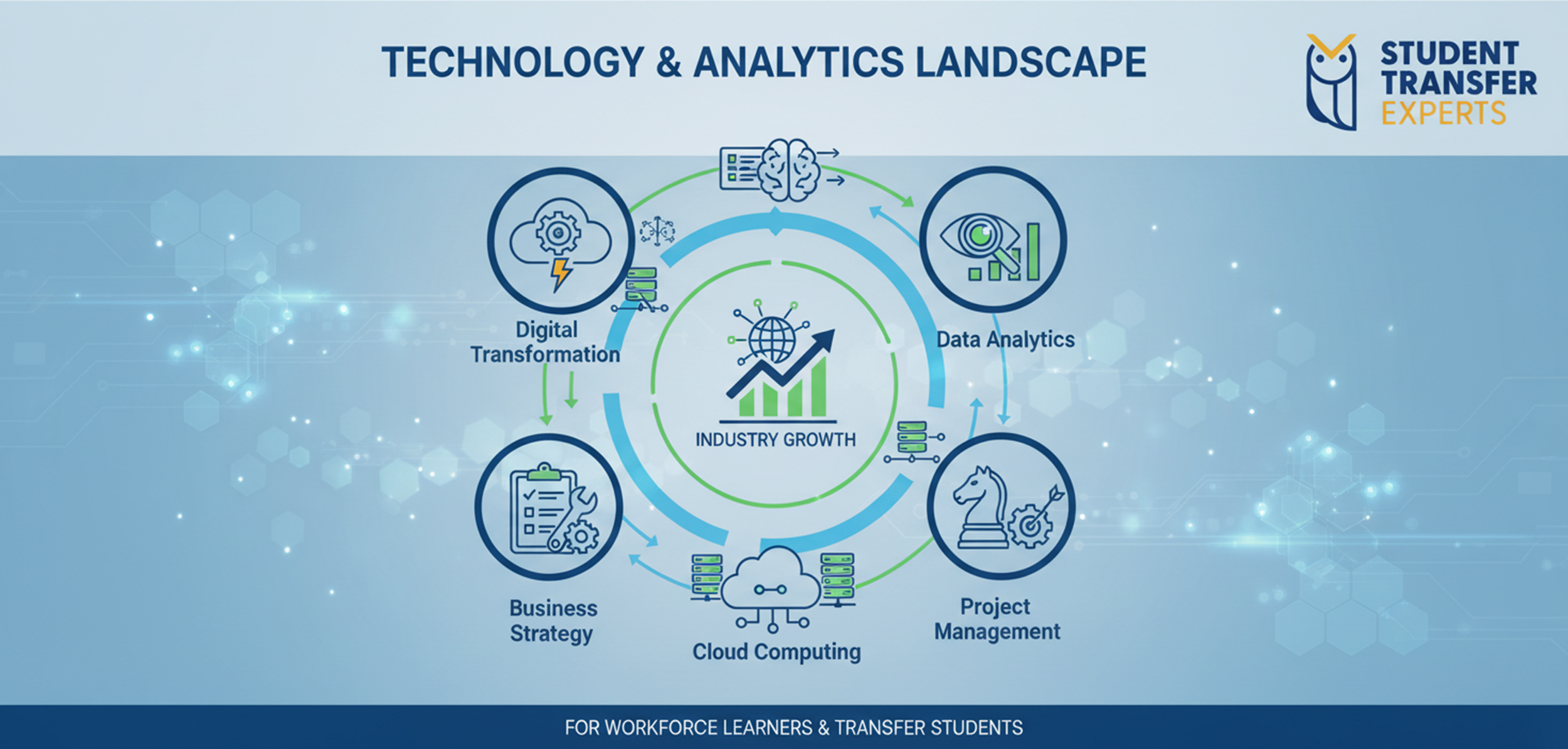
The technology management and business analytics sector is rapidly evolving, with projected double-digit growth in management roles through 2030. Key industry trends include:
Digital transformation: Organizations across sectors are investing in cloud computing, AI, and automation.
Data-driven decision-making: Business analytics is now central to strategy, operations, and innovation.
Cross-sector demand: Employers in finance, healthcare, manufacturing, and tech seek professionals who can bridge IT and business.
Professional organizations: Groups like INFORMS, PMI, and ISACA set standards and offer networking for analytics and tech management professionals.
Career opportunities:
Graduates are prepared for roles such as product manager, systems analyst, IT consultant, and technology project manager—positions that require both technical and strategic expertise.
Why Low-Residency Works Especially Well for Technology Management & Business Analytics
Infographic of Low Residency Format Benefits
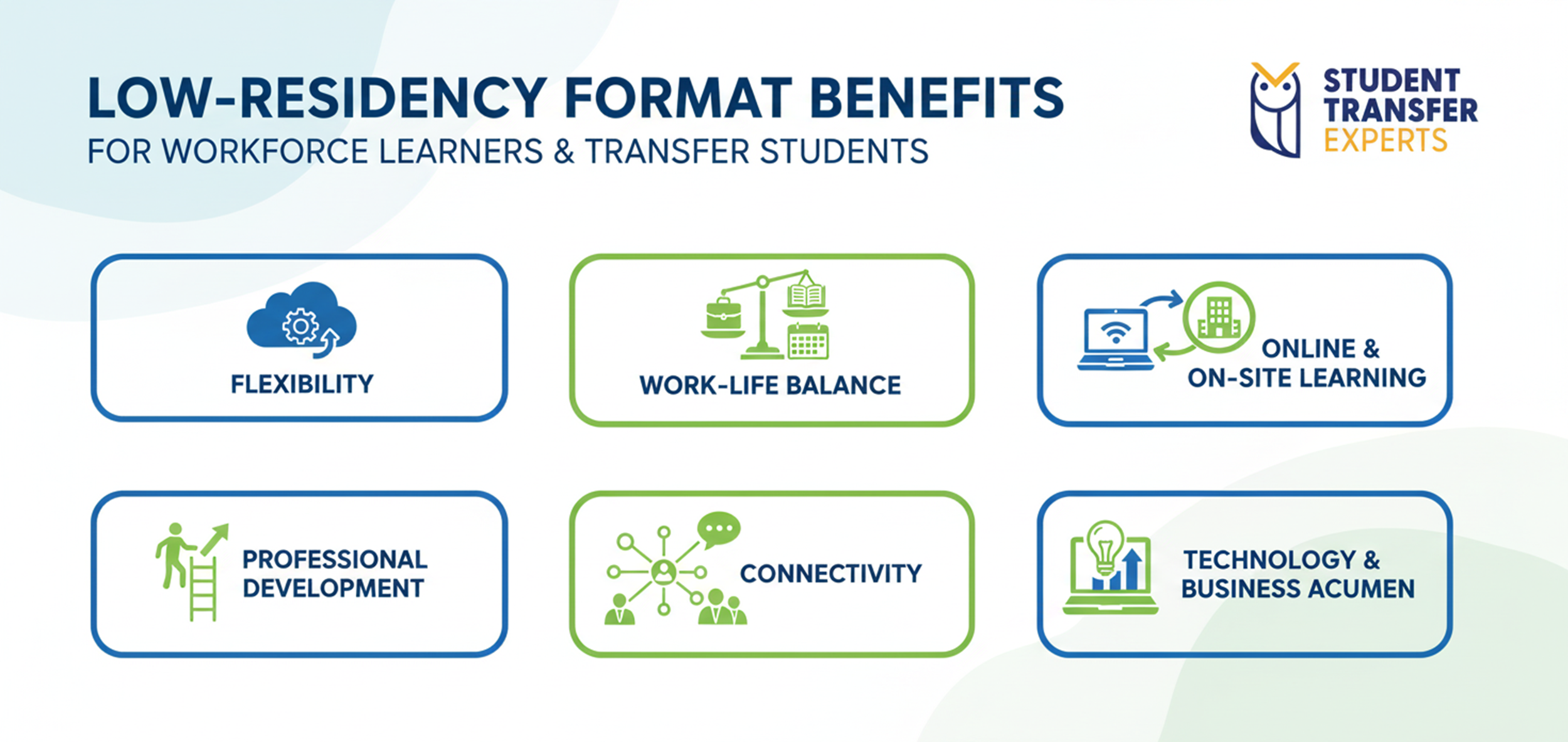
Low-residency formats are particularly effective for this field because:
Practical, hands-on learning: On-site sessions allow for real-world project work, networking, and exposure to industry-standard tools.
Flexibility: Online coursework fits around work schedules, enabling professionals to upskill without career interruption.
Workforce alignment: The format supports immediate application of new skills in the workplace, enhancing learning outcomes.
Transfer-friendly: Periodic residencies make it easier for transfer students to integrate, access campus resources, and build professional networks.
For workforce learners, this means the ability to advance careers while maintaining employment. For transfer students, it offers a smooth transition and continuity in academic and professional development.
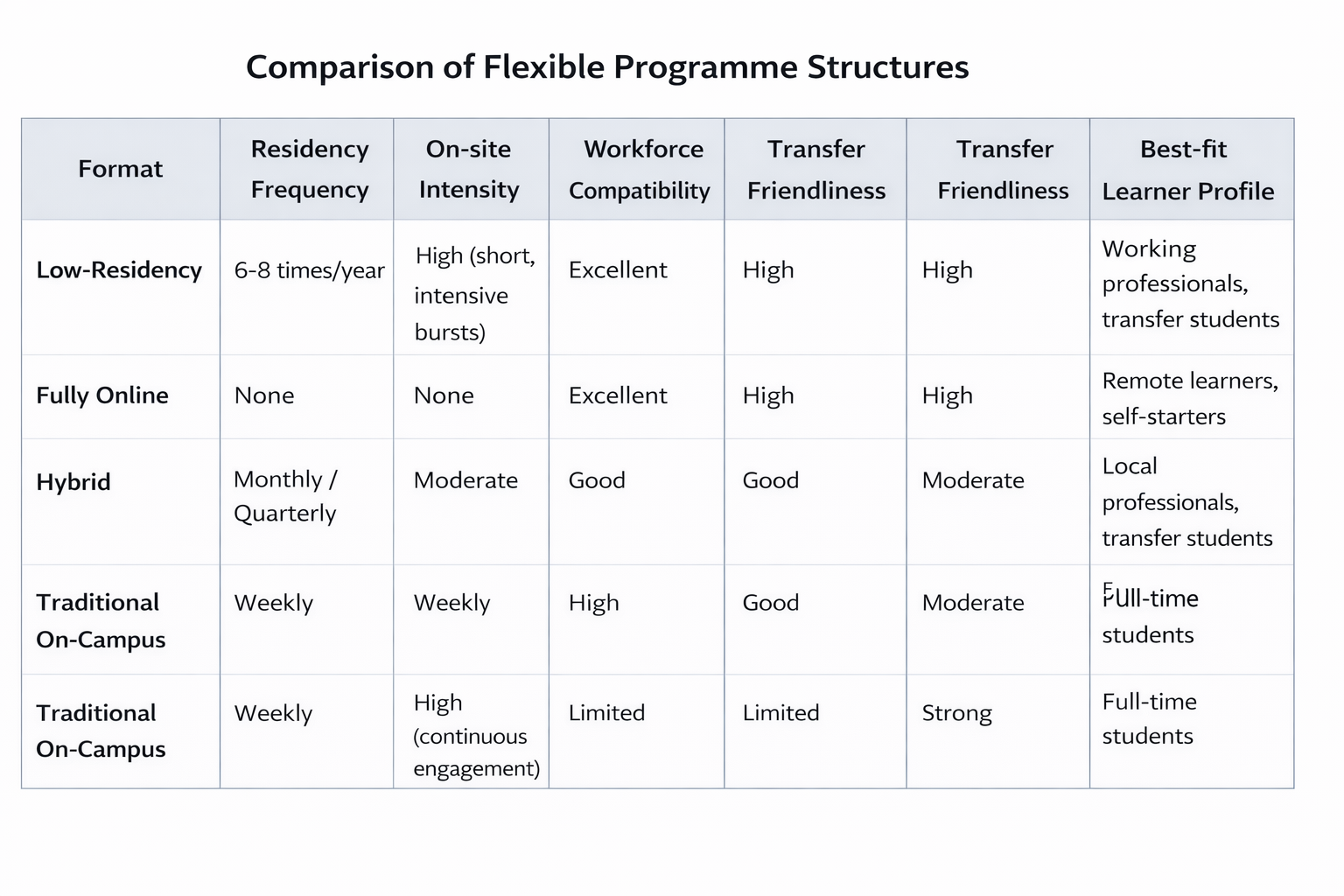
Table of Comparison of Flexible Programme Structures
Interpretation:
Low-residency programs offer the best balance for working professionals and transfer students in technology management and business analytics, combining flexibility, practical learning, and strong CPT (Curricular Practical Training) alignment.
Curriculum & Skills: What Learners Actually Build
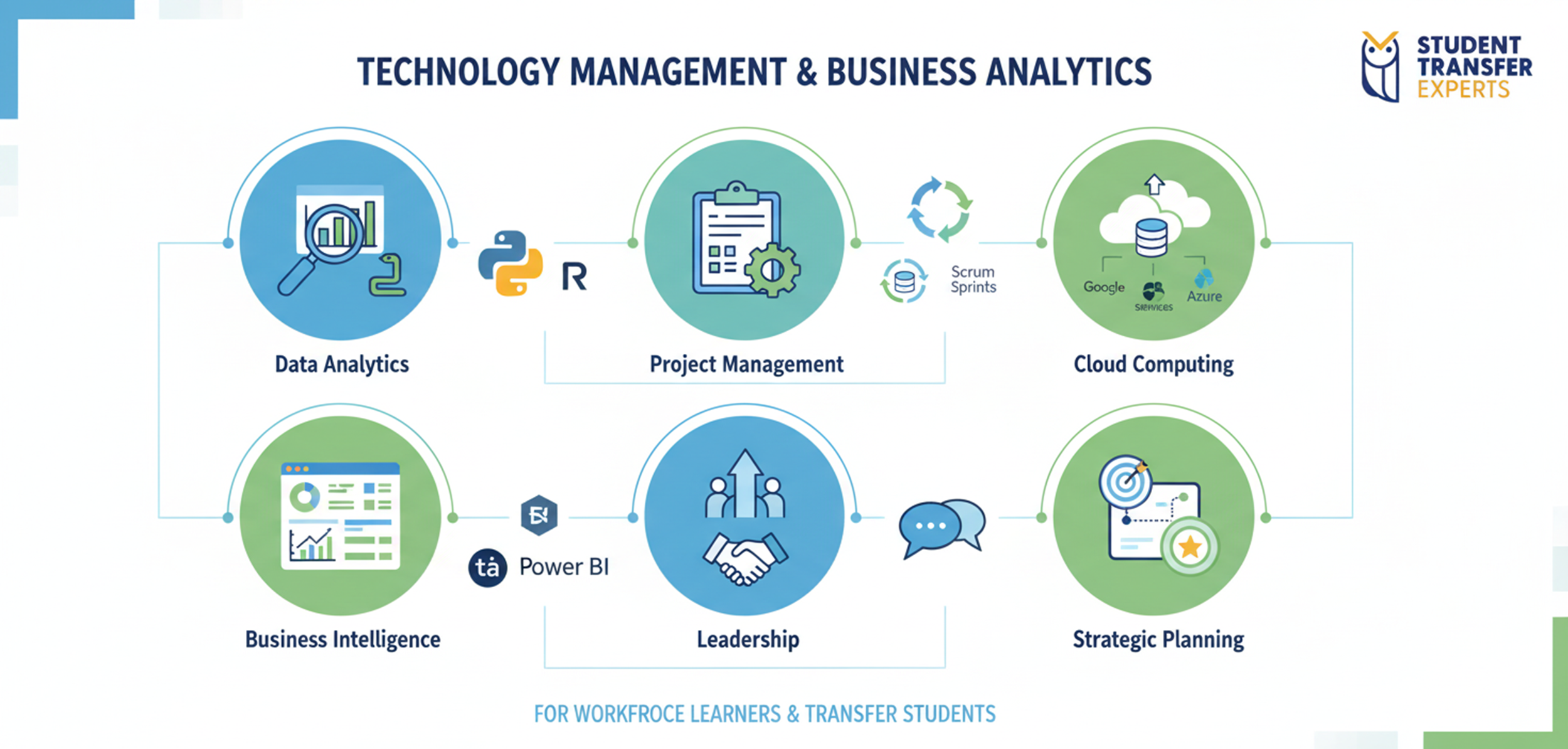
Infographic of Technology Management & Business Analytics
Core competencies developed:
Data analytics & business intelligence: Mastery of tools like SQL, Python, Tableau, and Power BI
Project management: Agile, Scrum, and PMP-aligned methodologies
Cloud computing & IT infrastructure: Skills in managing cloud platforms and digital resources
Cybersecurity & risk management: Understanding of digital risk and protection strategies
Strategic leadership: Leading cross-functional teams and driving digital transformation
Communication & teamwork: Translating technical insights for business stakeholders
Applied learning:
Internships, capstone projects, and real-world case studies are often integrated, ensuring graduates are workforce-ready.
How Industry Values These Skills
Employers across industries value graduates who can:
Bridge business and technology: Align IT initiatives with organisational strategy
Drive innovation: Lead digital transformation and data-driven projects
Communicate effectively: Translate analytics into actionable business insights
Manage complex projects: Oversee teams, budgets, and timelines in dynamic environments
Relevant organizations:
INFORMS (analytics professionals)
PMI (project management)
ISACA (IT governance and cybersecurity)
Tech employers: Google, Amazon, Deloitte, Accenture, and major healthcare and finance firms
Why applied learning matters:
Employers prefer candidates with hands-on experience and practical skills over purely theoretical knowledge, making low-residency programs with real-world components highly attractive.
Value for Transfer Students
STE’s university partners offer transfer-friendly pathways for the MS in Technology Management (Business Analytics), including:
CPT/OPT alignment: The STEM designation and practical curriculum support strong CPT/OPT opportunities for international students and those seeking work experience in the US.
CGPA and credit transfer flexibility: Many partners accept prior coursework and offer clear credit transfer policies, reducing time to degree.
On-campus residency benefits: Short, intensive residencies provide access to labs, faculty, and peer networks—critical for transfer student integration.
Cost advantages: Low-residency and hybrid formats often reduce living expenses and allow continued employment.
Visa and process guidance: STE and its partners provide advisory support for visa processes, though not legal advice.
TransferGPT:
This STE tool helps students map transfer credits, evaluate CPT/OPT options, and plan academic pathways tailored to their backgrounds and goals.
Who This Programme Is For
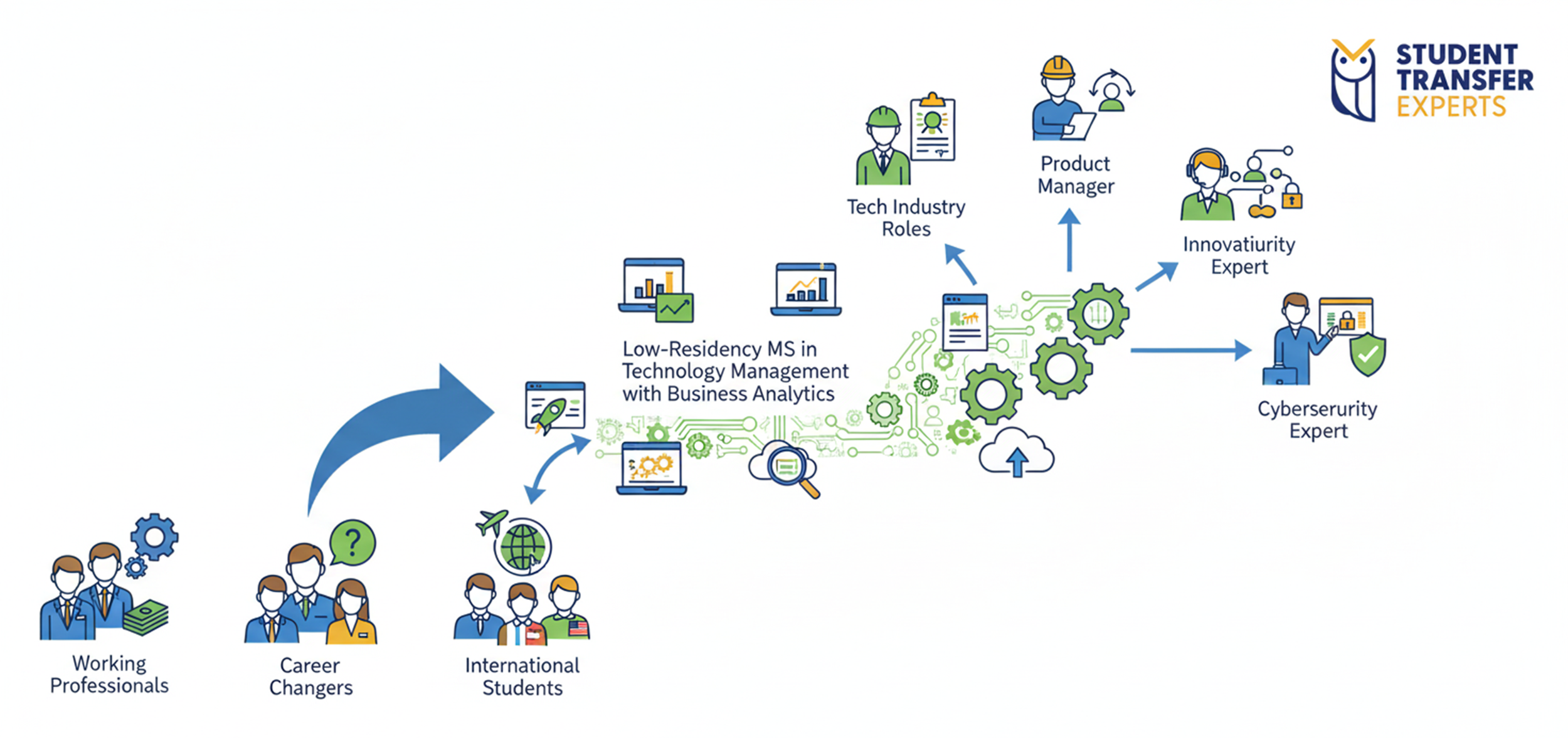
Infographic of Career Path in Technology Management & Analytics
Best suited for:
Workforce learners: Professionals seeking advancement in tech, business, or analytics roles
Transfer students: Those with prior coursework in business, IT, or analytics looking for a flexible, career-aligned master’s
Career changers: Individuals from adjacent fields (engineering, business, healthcare) aiming to pivot into technology management or analytics
Who should consider alternatives:
Those seeking a purely research-focused or theoretical program
Students unable to attend any on-site sessions
Learners preferring a traditional, full-time campus experience
Take the Next Step
If you're ready to evaluate your academic or professional pathway:
👉 Begin Your Application / Evaluation
If you need clarity on: • Transfers • Fresh admissions • STEM pathways • CPT/OPT • Low-residency formats • Career alignment
👉 Ask STE GPT your questions first
#LowResidencyEducation #TransferStudents #TechnologyManagement #BusinessAnalytics #WorkforceLearning #FlexibleEducation #CareerAdvancement #OnlineEducation #HigherEducation #StudentTransferExperts #TransferGPT #STEMMasters #DigitalTransformation #DataAnalytics #ProjectManagement