How a Low-Residency MS in Technology Management – Data Science Concentration Supports Workforce Learning and Transfer Continuity
Blog title image
Introduction: Why Low-Residency MS in Technology Management Programmes Matter
An MS in Technology Management with a Data Science concentration sits at an increasingly important intersection: technology operations, analytics, leadership, and organizational decision-making. It is not simply a technical degree and not purely a management degree either. Instead, it prepares learners to translate data into action, lead cross-functional teams, and support digital transformation in business, healthcare, education, logistics, finance, and public-sector settings.
That combination matters because employers increasingly need professionals who can do more than build dashboards or interpret models. They need people who understand data governance, project execution, business intelligence, cloud-based systems, privacy, change management, and stakeholder communication. In other words, they need leaders who can connect technical insight with organizational outcomes.
For that reason, the low-residency model is especially relevant. A low-residency structure allows students to complete most coursework remotely while attending periodic in-person sessions for intensive collaboration, applied learning, presentations, residencies, or networking. For workforce learners, this supports career continuity. For transfer students already studying in the US, it can also support academic progression, schedule flexibility, and more practical planning around transfer credits, CPT/OPT pathways, and residency expectations.
If you are evaluating a low-residency MS in Technology Management as a transfer student or working professional, the key question is not only whether the format is convenient. It is whether the programme helps you build durable, employer-valued skills without interrupting your academic or career momentum. In many cases, the answer is yes.
Understanding the Programme: MS in Technology Management – Data Science Concentration
A programme in Technology Management with a Data Science concentration typically prepares learners for roles where technical literacy and management judgment must work together. That includes positions related to analytics leadership, business intelligence, digital product strategy, technology operations, innovation management, data governance, and transformation planning.
The technology management side of the degree usually focuses on:
leadership and organizational behavior
project and product execution
innovation strategy
cross-functional team management
technology adoption and implementation
decision-making in complex organizations
The data science concentration adds applied analytical depth, often including:
data mining
statistical analysis
visualization and storytelling
cloud computing and big data environments
business intelligence and data warehousing
privacy, security, and governance principles
This concentration matters because many organizations no longer separate analytics from operations. Data is now embedded in planning, customer experience, supply chain design, automation, forecasting, compliance, and strategic growth. A manager who understands how data systems work—and how to lead people around them—can be more valuable than a specialist who only works inside a technical silo.
From a workforce perspective, this programme often supports professionals who want to move:
from analyst to team lead
from technical contributor to strategic manager
from operations into data-enabled decision roles
from general IT support into business-facing technology leadership
For transfer students, it can also be a useful bridge between prior coursework in business, IT, computer science, information systems, analytics, or related applied fields.
The Technology Management and Data Science Industry Landscape
Infographic of the Technology Management and Data Science Industry Landscape
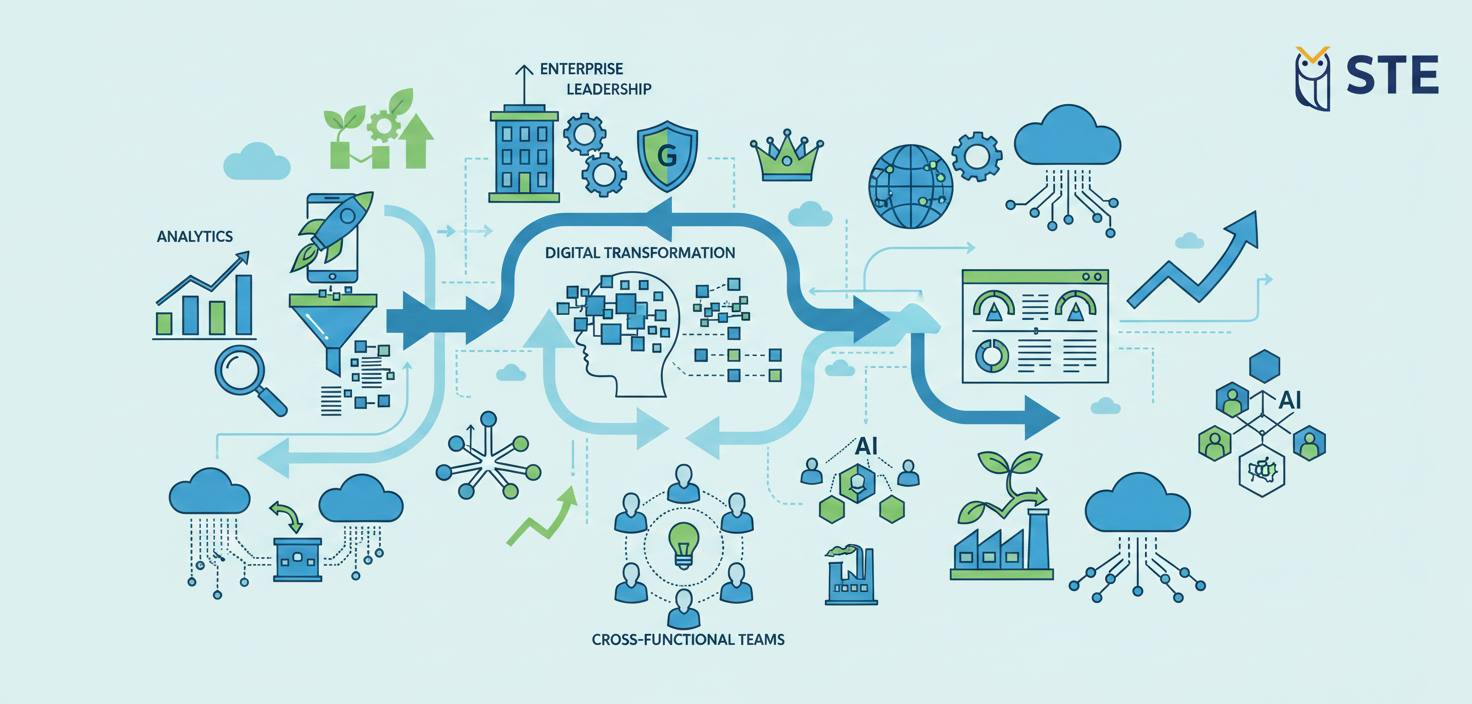
The broader market for technology management and data science continues to be shaped by digital transformation, AI adoption, cloud migration, cybersecurity concerns, and growing expectations for data-informed decision-making.
Recent industry reporting and programme descriptions consistently point to the same pattern: organizations want professionals who can connect analytics, governance, leadership, and execution. Management publications and technology media in 2026 have emphasized that data-literate managers are increasingly critical to enterprise modernization, responsible AI implementation, and scaling analytics programs across departments.
In practical terms, this means the employment landscape is not limited to “data scientist” roles. Graduates may target functions such as:
business intelligence analyst
data analyst
analytics manager
digital transformation manager
product or project manager in data-heavy environments
innovation manager
data governance specialist
cloud analytics or big data coordinator
technology strategy associate
The field also spans multiple sectors:
enterprise technology
consulting
healthcare operations
logistics and supply chain
financial services
higher education administration
nonprofit and mission-driven organizations
government and public systems
One helpful insight from externally reviewed programme material is that the degree’s value often comes from its applied breadth. Typical learning outcomes include not only data mining and statistical analysis, but also cloud platforms, business intelligence strategy, privacy and security, leadership, and project management. That mix reflects what employers increasingly need: professionals who can manage implementation, not just produce analysis.
In short, the market rewards people who can answer questions like:
Which data matters most to the organisation?
How should teams operationalise insight?
What governance and privacy controls are necessary?
How do you communicate findings to executives and nontechnical stakeholders?
How do you move from prototype to scalable implementation?
Those are technology management questions shaped by data science, which is exactly why this degree has career relevance.
Why Low-Residency Works Especially Well for Technology Management and Data Science
Infographic of Balancing Tech Career & Education
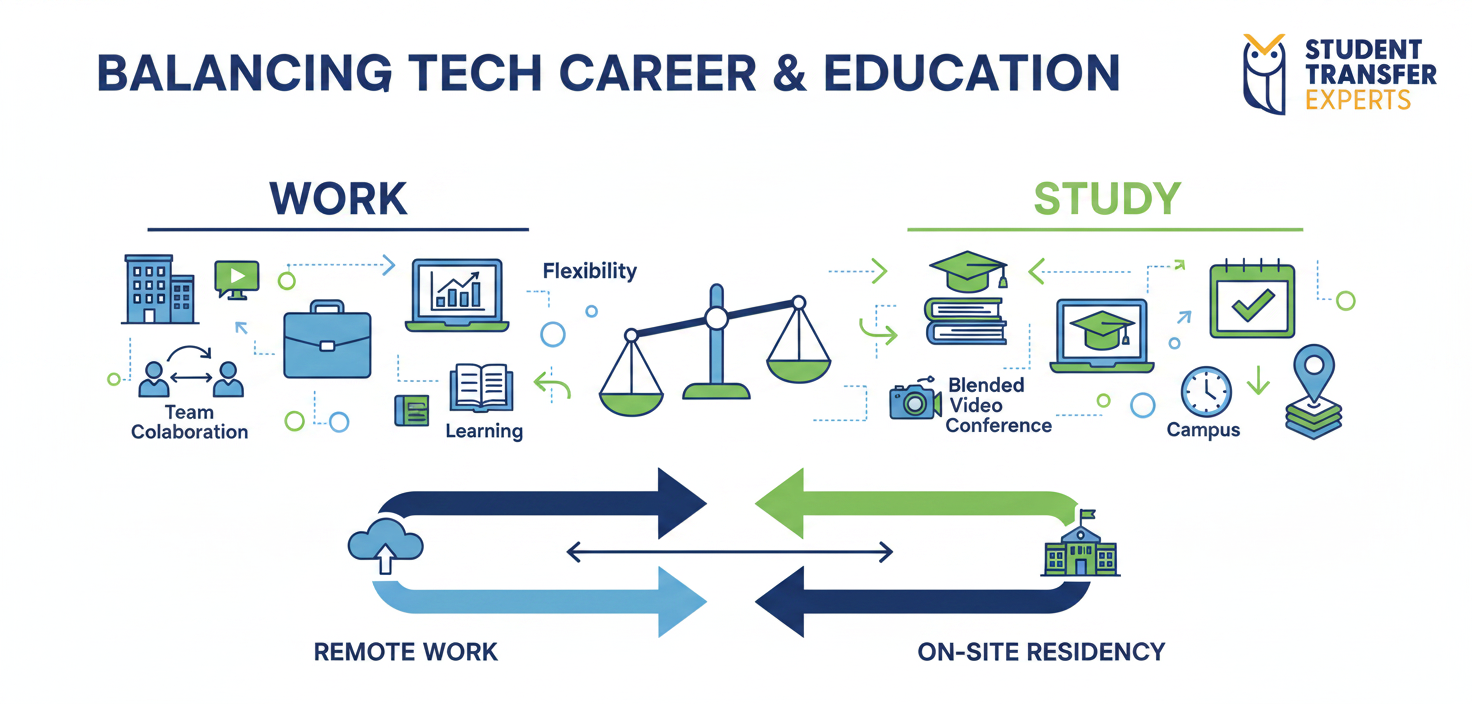
A low-residency structure works especially well for this field because technology management is inherently applied, collaborative, and workforce-connected.
Unlike programmes that depend heavily on daily lab access, a technology management degree with a data science concentration can often deliver much of its academic content online:
analytics coursework
cloud and BI concepts
management theory
case-based strategy work
dashboard design
project planning
collaborative problem-solving
At the same time, periodic on-site sessions can still add real value. Residencies may support:
team-based simulations
executive-style presentations
capstone workshops
faculty feedback intensives
peer networking
short in-person labs or tool demonstrations
employer-facing project showcases
For working professionals, this is a strong format because it respects the reality of modern employment. Many learners in this field are already working in IT, operations, analytics, customer success, software support, or business functions. A low-residency model lets them continue building experience while studying.
For transfer students, the format can support continuity in a different way. It may reduce the disruption that often comes with changing institutions or reconfiguring a study plan. It also gives students more room to coordinate:
credit evaluation
prerequisite mapping
residency planning
internship timing
CPT/OPT-aligned role exploration
transitions between academic terms
Most importantly, low-residency learning mirrors the actual workplace. Technology and analytics teams already work in hybrid ways: remote collaboration, digital dashboards, periodic strategy meetings, and project-based execution. The format itself can therefore reinforce the habits the field demands.
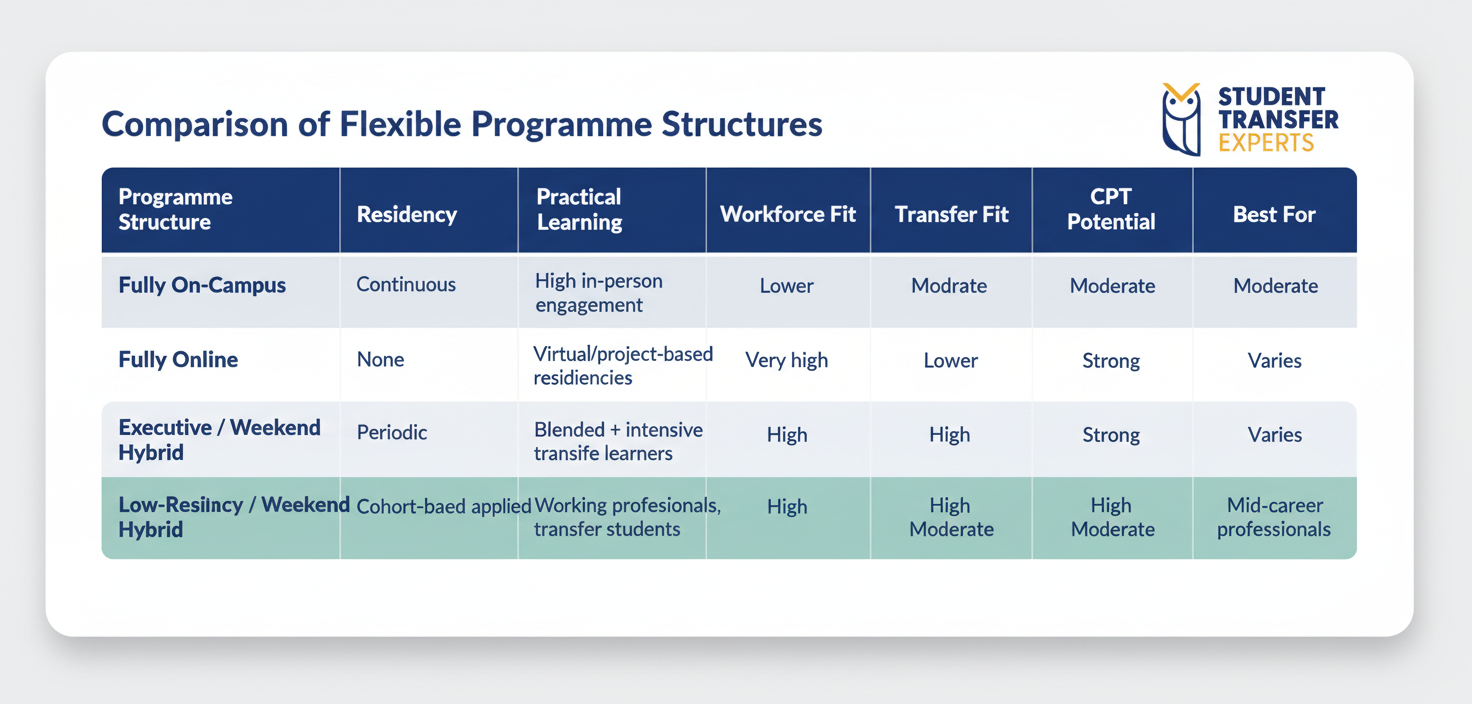
Comparison of Flexible Programme Structures
Comparison Table of FLexible Programme Structures
For Technology Management – Data Science, the low-residency option is often the most balanced. It preserves flexibility for professionals and transfer students, while still allowing for short, high-value in-person experiences that strengthen applied learning, communication, and networking.
Curriculum & Skills: What Learners Actually Build
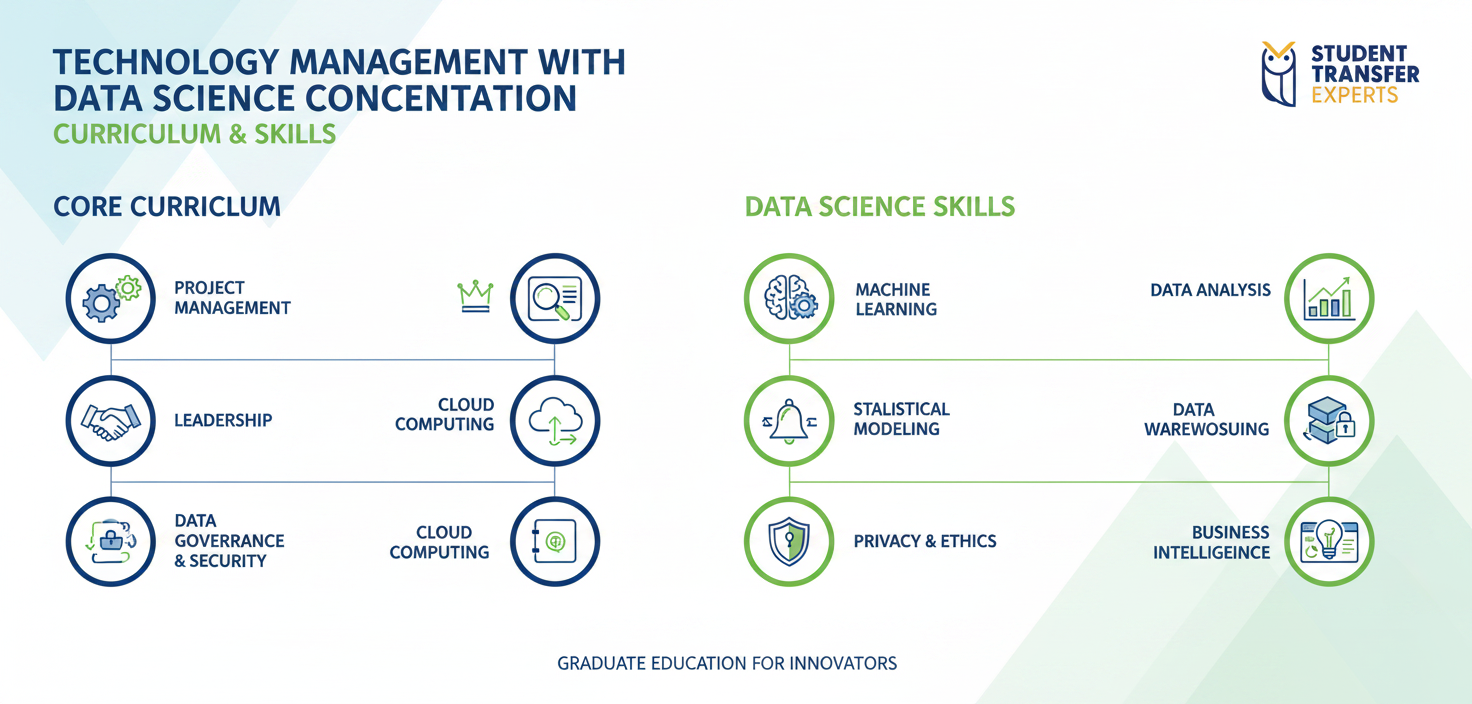
Infographic of Curriculum & Skills
A strong MS in Technology Management – Data Science concentration should build both technical fluency and management capability.
Typical curriculum areas include:
Data and Analytical Foundations
data mining
statistical analysis
experimental design
machine learning foundations
data exploration and interpretation
Business Intelligence and Decision Support
data warehousing
BI strategy
dashboard development
visualization and storytelling
turning analysis into stakeholder recommendations
Infrastructure and Scalability
cloud computing
big data environments
platform evaluation
scalable system thinking
Governance, Risk, and Ethics
data privacy
security principles
ethical data use
governance frameworks
compliance-aware decision-making
Management and Leadership
project management
innovation and creativity
leadership processes
organizational behavior
cross-functional execution
This blend is particularly valuable because employers rarely need analytics in isolation. They need professionals who can prioritize, communicate, manage timelines, align teams, and implement responsibly.
Learners in this kind of programme often develop workforce-relevant skills such as:
presenting data to nontechnical decision-makers
evaluating the business impact of analytics choices
managing projects across technical and business teams
aligning data strategy with operational goals
using evidence to support transformation initiatives
balancing speed, governance, and quality in technology environments
For transfer students, this can be a practical advantage. Prior credits from business, information systems, computing, or analytics coursework may map more naturally into an applied interdisciplinary programme than into a narrowly specialized research path.
How Industry Values These Skills
Employers across industries increasingly value professionals who can move from analytics to action.
That means a graduate is often more competitive when they can combine:
technical understanding
management judgment
communication skills
governance awareness
implementation discipline
Organizations value these skills because data initiatives often fail not from lack of tools, but from weak adoption, poor coordination, unclear ownership, or inability to translate insights into operational change.
Relevant employer environments may include:
enterprise IT and analytics teams
consulting firms
digital transformation offices
operations and strategy groups
product and platform teams
healthcare systems using analytics for efficiency and planning
financial organizations managing risk and reporting
nonprofits and public agencies modernizing data systems
Applied learning is especially important here. Employers generally prefer graduates who can show evidence of:
project work
dashboard creation
case-based analysis
internships or practicum activity
cross-functional collaboration
capstone problem-solving
That is one reason low-residency programmes can be effective. They often make it easier for learners to keep one foot in the workplace while building academic skill.
Value for Transfer Students
For transfer students, a low-residency MS in Technology Management – Data Science concentration can offer several practical advantages, especially when working with our university partners and an advisor who understands transfer planning.
CPT/OPT Relevance for Technology and Data Roles
This field aligns well with common professional pathways connected to analytics, business intelligence, data operations, digital transformation, and technology project work. Depending on programme structure and institutional policies, students may find stronger relevance for roles involving applied analytics, internships, practicum experiences, capstones, or project-based work. OPT pathways may also be relevant after graduation, particularly where the degree is structured within a STEM-oriented framework. Students should always confirm programme classification, internship rules, and work authorization details directly with the institution and appropriate advisors.
CGPA and Credit Transfer Flexibility
In applied graduate technology programmes, admissions review may be more flexible than students expect, especially where institutions evaluate the full profile rather than only one metric. Some programmes may admit students provisionally if their prior GPA is slightly below the standard threshold, and others may evaluate prerequisite strength, work experience, or related credits. Transfer students with prior learning in computer science, business analytics, information systems, or business may also find opportunities for prerequisite waivers or smoother academic mapping.
On-Campus Residency Requirements and Practical Learning
Low-residency does not mean “less serious.” In many cases, the short on-campus component strengthens the programme by creating focused space for collaboration, faculty interaction, and presentation-based learning. For transfer students who do not want a daily campus schedule but still value direct engagement, this can be an effective middle path.
Relative Cost Advantages
Without citing specific figures, it is fair to say that flexible and transfer-aware programme structures can sometimes reduce total educational friction. When credits transfer well, when prerequisite duplication is minimized, and when a student can continue working while studying, the overall pathway may be more efficient. That is often more useful than comparing sticker prices alone.
Visa and Immigration Process Guidance
For international or transfer students already in the US, programme format, institutional process, documentation timing, and academic continuity all matter. While this is not legal advice, students should evaluate residency expectations, transfer timelines, I-20-related processes where relevant, and internship planning early. A strong advising process can help students ask the right questions before making a move.
If students need help understanding these issues, tools like TransferGPT can help them clarify transfer scenarios, and TransferBuddy-style support can make early-stage pathway questions easier to organize before applying.
Who This Programme Is For
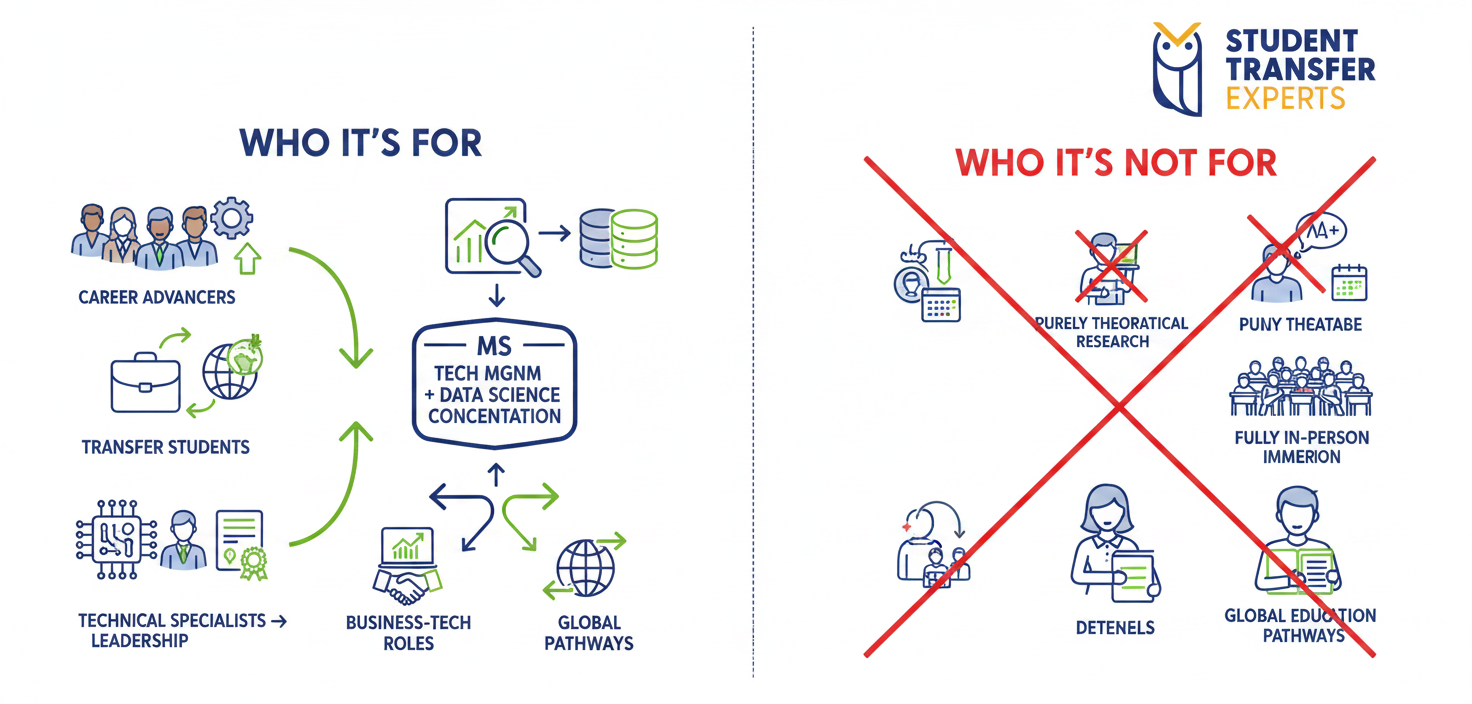
Infographic of Who this Programme is for
This programme is often a good fit for:
Best-Fit Learners
working professionals in IT, analytics, operations, or business systems
transfer students seeking continuity without committing to a fully traditional campus model
analysts who want to move into leadership or strategy
technical professionals who need stronger management and communication skills
career advancers interested in digital transformation, BI, or data-enabled operations
In other words, this is a strong programme for learners who want to become translators, implementers, and leaders in data-driven organizations.
Take the Next Step
If you're ready to evaluate your academic or professional pathway:
👉 Begin Your Application / Evaluation
https://form.typeform.com/to/HRz41hcQ
If you need clarity on: • Transfers • Fresh admissions • STEM pathways • CPT/OPT • Low-residency formats • Career alignment
👉 Ask STE GPT your questions first
https://gpt.studenttransferexperts.com/
#LowResidencyEducation #TechnologyManagement #DataScience #TransferStudents #WorkforceLearning #FlexibleEducation #CareerAdvancement #OnlineEducation #DigitalTransformation #BusinessIntelligence #TechnologyLeadership #HigherEducation #StudentTransferExperts #TransferGPT